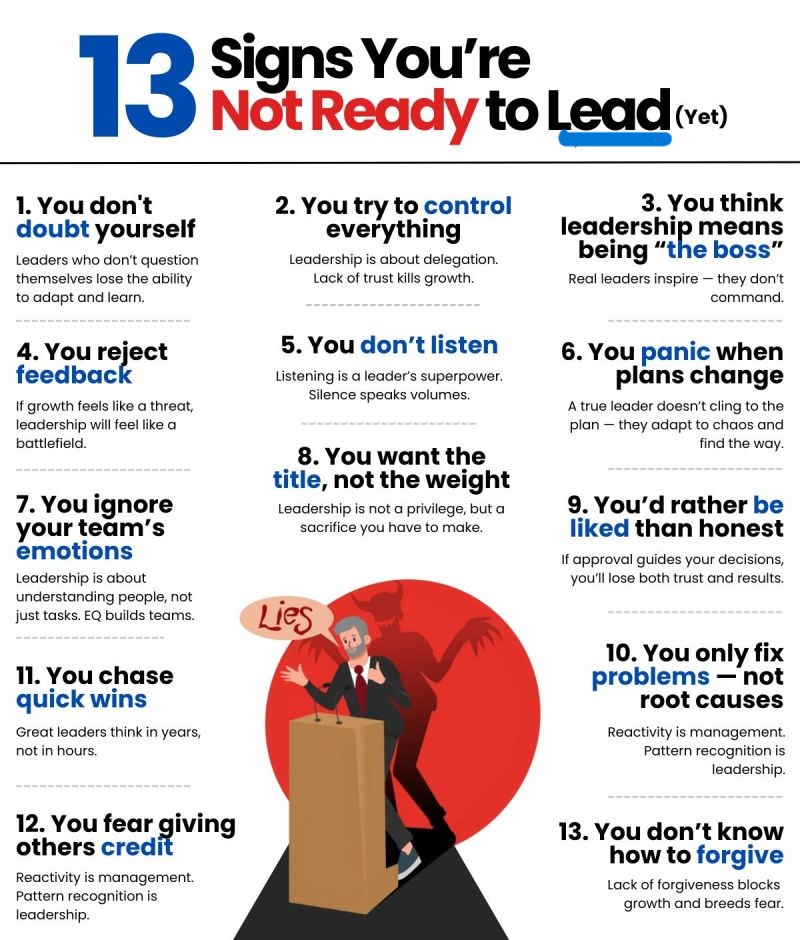
4. You Reject Feedback
If you feel attacked when someone gives you criticism, you may not be ready to lead. Consider a regional manager who blames the market instead of adjusting strategy when performance declines. Growth begins when leaders treat feedback as information, not as an insult. Mature leaders listen, reflect, and adapt.
5. You Don’t Truly Listen
Many people hear words, but they do not truly listen. In a meeting, if a team member raises a concern and you ignore it, that overlooked risk may later become a serious problem. Listening is a leadership superpower. It builds trust, strengthens collaboration, and prevents avoidable failures.
6. You Panic When Plans Change
Change is inevitable in business and life. Markets shift, strategies evolve, and unexpected problems appear. If you lose control or start blaming others when plans change, leadership may not yet be your strength. Real leaders stay calm during uncertainty and adjust strategically.
7. You Ignore Your Team’s Emotions
If you focus only on performance numbers and ignore emotional wellbeing, long-term results will suffer. Many managers push aggressive sales targets without noticing burnout within the team. Short-term success may occur, but long-term motivation collapses. Leadership requires emotional intelligence. People are not machines.
8. You Want the Title, Not the Responsibility
Some individuals want to become “Team Lead” or “Manager” but avoid difficult conversations and hard decisions. Leadership is not about status; it is about accountability. When problems arise, a true leader steps forward and takes responsibility rather than avoiding pressure.
9. You’d Rather Be Liked Than Honest
If you avoid difficult conversations to remain popular, you create bigger problems in the future. For example, failing to give honest feedback to an underperforming employee may lead to sudden termination later, damaging trust. Honest leadership may feel uncomfortable in the short term, but it builds respect long term.
10. You Fix Problems, Not Root Causes
Some leaders address visible issues without investigating why they happen repeatedly. A company may compensate customers for complaints but never analyze the flawed system causing those complaints. Real leadership focuses on solving root causes, not just symptoms.
11. You Chase Quick Wins
If you prioritize short-term results over long-term growth, sustainability becomes weak. For instance, cutting employee training to improve quarterly profit may look good temporarily, but skill gaps will hurt the company later. Strong leaders think in years, not weeks.
12. You Fear Giving Others Credit
When a project succeeds and you present it as your personal achievement, team morale decreases. The best leaders highlight their team’s contributions publicly. When your team grows, your leadership becomes stronger.
13. You Don’t Know How to Forgive
Holding grudges creates fear. If a team member improves after making a mistake but you continue to distrust them, innovation and confidence will decline. Leadership requires psychological safety. Forgiveness encourages learning and loyalty.